neighbors · building · afternoons
The Neighbor with the Drill Has a Name
Six years hating a drill that wakes me up at noon. With my afternoons free, I finally knocked on his door and found a man who makes wooden cup-and-ball toys.
On Tuesday, at a quarter past one in the afternoon, the drill started again. First a short buzz, like a test, then the real thing: long, shrill, coming through my bedroom wall into the pillow, past the earplugs, into some place behind my eyes where I thought nothing could reach. Six years. I've mentioned it here more than once, when I talked about how I sleep, always the way you mention the weather: something that happens and that you can't do anything about except swear quietly.
This time I didn't swear. I lay there with my eyes open, counting. Four bursts, a pause, four bursts. It had a rhythm. I'd never noticed the rhythm, because you don't pay attention to things you hate.
What free afternoons do to you
If I were running, at four-thirty I'd have laced up and forgotten all about it. But I still have two days left on the bench and the afternoons are still long and strange, so I got up, made coffee, watered Chela even though it wasn't Sunday, and stood in the living room staring at the wall I share with the apartment next door, 204, as if the wall owed me something.
I don't know who lives in 204. That's the most embarrassing part of this story. I've lived six years one wall away from someone, and all I know about them is that they own a drill and like to use it right when I'm at the bottom of my sleep. In my head it was a guy around thirty, the kind who buys flat-pack furniture and doesn't read the instructions. I'd even given him a face.
At ten past five I knocked. I was in sweatpants with my bun falling apart, and I had a very polite sentence ready that began with "Excuse me, I don't know if you know I work nights." I forgot it the moment the door opened.
Don Rogelio
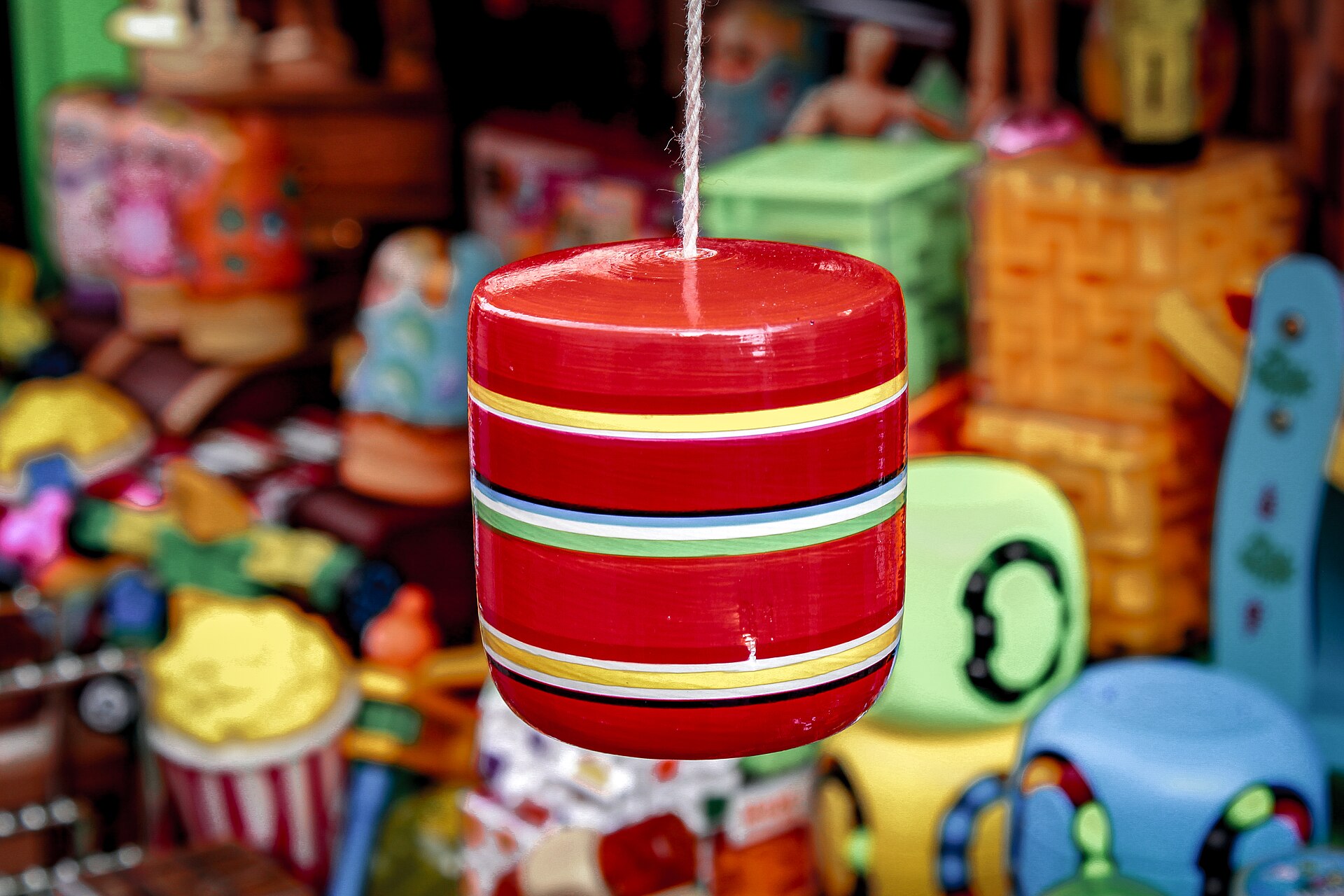
The man who opened was about seventy-five, short, in a plaid shirt buttoned all the way up, with reading glasses pushed onto his forehead. He smelled of wood and Vicks VapoRub. Behind him, in what in my apartment is the living room, there was a workbench with a vise, a green drill press, little jars of paint and, on the floor, on sheets of newspaper, something like eighty baleros.
Baleros: the wooden cup-and-ball toys you win at the fair, a stick and a ball on a string. Some painted red with white stripes, some still bare, the color of bread.
"You're the nurse," he said before I could speak. "The one who gets home at eight."
He knew exactly who I was. His name is Rogelio, he taught shop class at a technical middle school for thirty-one years, and since he retired he makes baleros and spinning tops that he sells on Sundays at the La Pastora street market. He drills the holes at midday because in the morning his hands shake and by evening he can't see well. "After lunch I've got the hands of a young man," he said, and held one out, perfectly still, as evidence.
The negotiation
I explained my schedule. He listened very seriously, nodding, with the face my mom makes when I explain something about her phone that she has no intention of doing. Then he said his wife, who passed away, used to call the drill a rudeness, and he always answered that it was a tool. That he didn't have anyone to tell him that anymore. That it was nice to have someone complain again.
I didn't know what to do with that. At the hospital I know what to do with that: I sit on the little stool and I stay. Here I was standing in a stranger's doorway in sweatpants, my polite sentence lost somewhere.
We made a deal. He drills from four-thirty to six, when I'm already up, and if he's ever in a hurry he knocks twice on the wall before starting. In exchange, I don't say anything to the building manager, whom I've never met either, and I buy a balero. He wanted to give me one. I wouldn't let him. He charged me thirty pesos, less than at the market, and I wouldn't let him do that either, but that round he won.
The clack
I picked a red one with white stripes. I tried it right there in the hallway and the ball hit my knuckles three times in a row. Don Rogelio laughed with his whole mouth and told me to hold it with a loose wrist, "like you don't care."
Last night, at four in the morning, in the dead stretch, I took it out at the nurses' station. Pao saw it and said, "Where'd you get that, a museum?" At four-twenty I landed the ball for the first time. Clack. A dry sound, wood on wood, and in that silence of humming lights you could hear it all the way to bay four.
Today I slept straight through. At four thirty-two, coffee mug already in hand, I heard two little knocks on the wall. And then the drill.
Keep reading
The four-minute voice note
My sister Lucía's voice note sat unplayed on my phone for eleven days. Today, on the way to the grocery store, I finally pressed play.
The Plant in the Dark Room
My mom gave me a pothos cutting a year ago, and I sleep behind bunker curtains. A plant that asks for nothing, a Sunday watering and one new leaf.
The Seven O'Clock Tamales
Outside the hospital at seven in the morning, a woman has been selling tamales and atole for eleven years. I've bought from her for six without knowing her name.