niece and nephew · parade · sisters
Mateo's Mustache
The November 20 parade at my niece and nephew's school. A mustache smudged at seven in the morning, a skin marker in my pocket and one purple revolutionary.
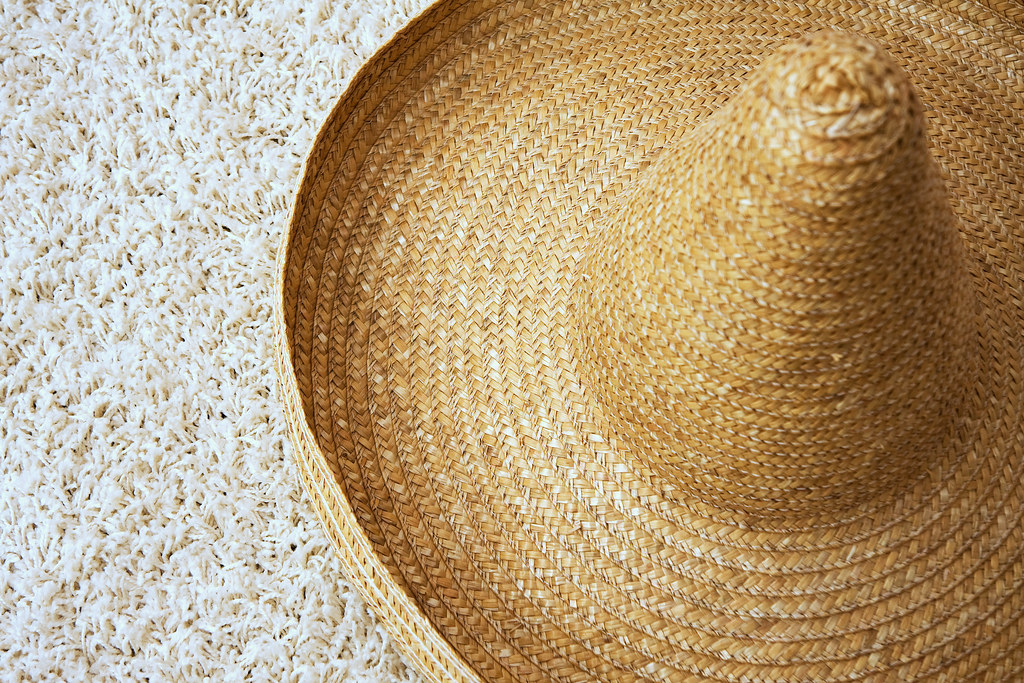
At ten past seven in the morning, while I was closing the last nursing chart of the night, Andrea sent me a voice note. I listened with the phone pressed to my ear, behind the counter at the nurses' station, so nobody else would hear. Mateo was crying in the background, that seven-year-old crying that's half sadness and half negotiation, and on top of it was my sister's voice, very calm, which is how Andrea talks when she is no longer calm at all.
"His mustache smudged. He sneezed. I painted it again and it's worse. The parade is at nine. Do you have anything?"
I haven't owned eyeliner since 2019. But I put my hand in my uniform pocket, the left one, the one with the pinch of salt, and there was what's always there: two pens, a penlight, a paper measuring tape and the skin marker, the purple-tipped one we use to mark where a pulse can be felt on a foot, so nobody has to hunt for it again at four in the morning. I wrote back: "On my way."
Cardboard revolutionaries
I left at seven forty, no tamal. Don Memo watched me walk right past the tamal lady and shouted from the guard booth to ask if I was sick. I told him I had a parade. Diurex, curled up in the sheepskin vest, didn't even open her eyes.
Andrea's house looked the way houses look on school festival days: the dining table buried in poster-board scraps, a hot glue gun plugged in on the floor, Rubén looking for the truck keys with a piece of sweet bread in his mouth. Valeria, hair already up in a high bun with a red, white and green bow, was sitting on the stairs, ready since who knows when, watching everything with her mother's face.
Mateo was in the bathroom, standing on a stool, wearing a palm hat wider than his shoulders, two brown-painted cardboard bandoliers crossed over his chest and, under his nose, a black smear that was no longer a mustache. It was a shadow, as if he'd eaten mole with his whole face. He'd stopped crying the moment he heard my car. All that was left were red eyes and wounded dignity.
I cleaned the smear off with a baby wipe, which that house still keeps in every drawer even though there's no baby anymore. I dried his skin. I uncapped the marker.
"It's going to be purple," I told him.
"Zapata wasn't purple."
"Zapata didn't sneeze."
He thought about it. He said fine. I drew him a long mustache with the tips pointing down, using the hand I have left after twelve hours, which isn't the steadiest hand in the world but beats Andrea's at seven in the morning. I thickened the ends, like the ones in the photos in his schoolbooks. He looked in the mirror, straightened his hat and said, "Huh. Okay, yeah."
The street by the school
The parade went around the school's block in Álamos: four streets, two laps, the drum and bugle corps in front. My mom had been there since a quarter past eight with two folding chairs and a thermos of champurrado, on the corner where, according to her, the sun hits first. She saw me arrive in my clogs with the scrubs under my sweatshirt and asked nothing. She poured me some in the thermos lid.
The sixth graders came first with the flag guard, very serious, keeping step with a drum that kept getting ahead of them. Then the fifth-grade girls with their rhythm routine: green, white and red pompoms, a Pedro Infante song on a speaker that cut out at every corner. Valeria was in the second row. I waved, small, at hip height, the way she taught me outside the school gate. She answered with the same gesture without missing a beat.
Somewhere between fifth grade and second grade I fell asleep. I know because I woke up with the thermos lid tilted, cold champurrado in my hand and my mother's elbow in my ribs: "Here he comes."
One in purple
The second graders came in two lines, twenty Zapatas and twenty Adelitas, all with the same black mustache and the same palm hat from the stationery shop on the corner. All but one. I spotted him from a block away. Under the nine-thirty sun, Mateo's mustache wasn't purple: it was bright violet, almost electric, one of those colors that only exist in nature in flowers and in bruises.
He was standing very straight. He was marching harder than anyone, knees up to his bandoliers, and when he passed in front of us he turned his head without breaking the line and yelled, "Auntie, long live the Revolution!" My mother laughed so hard she dropped the thermos lid. A woman next to us asked, in good faith, which historical figure the boy was dressed as. My mother said, "My grandson."
Andrea, by the school fence with her phone held up to film, found me with her eyes in the crowd and mouthed a word I can't write here, which later, in the chat, she replaced with a heart.
Ten past five
I slept from eleven to four thirty. When I woke up, "Las Ortega" had fourteen photos of the parade, a video of Valeria with her pompoms that she asked us to delete and nobody did, and a one-minute voice note from Lucía in Monterrey that just said "I want to see purple Zapata" over and over in many different ways.
Andrea sent the last photo a little while ago, from her bathroom. Mateo in the tub, bubbles up to his neck, wet hair sticking straight up and, under his nose, untouched, the violet mustache. Underneath she wrote: "It won't come off." And then: "He says he doesn't want it off. He says he's wearing it to school on Monday."
I told her it lasts three to five days, faster with baby oil. I didn't tell her that at the hospital, when we mark it on a foot, sometimes it's still there when the person goes home, and that this has always made me happy, for no reason anyone could explain.
The marker is back in my pocket now, next to the salt. It's a little low on ink. Tonight I'll be marking pulses with a seven-year-old's mustache on the tip.
Keep reading
A Gray Hair Against the Light
The five o'clock sun comes in through the little bathroom window, and yesterday it showed me a gray hair right where the bun used to be. My mom says don't pull it.
The Cat on the Ambulance
Since the cold front, a cat has been sleeping on the warm hood of ambulance two. Don Memo says he's not a cat person, the administration says no feeding wildlife, and the cat already has a name.
Don Rogelio's Knee
I got home from the hospital on the holiday Monday and my keys were inside, on the kitchen table. No locksmith, no sisters: a neighbor, an old X-ray and a click.