neighbors · rooftop · laundry
The Woman in 302
I hung my scrubs on the roof and left for the hospital. At two in the morning it rained. By morning my laundry was folded in a bag hanging from my door.
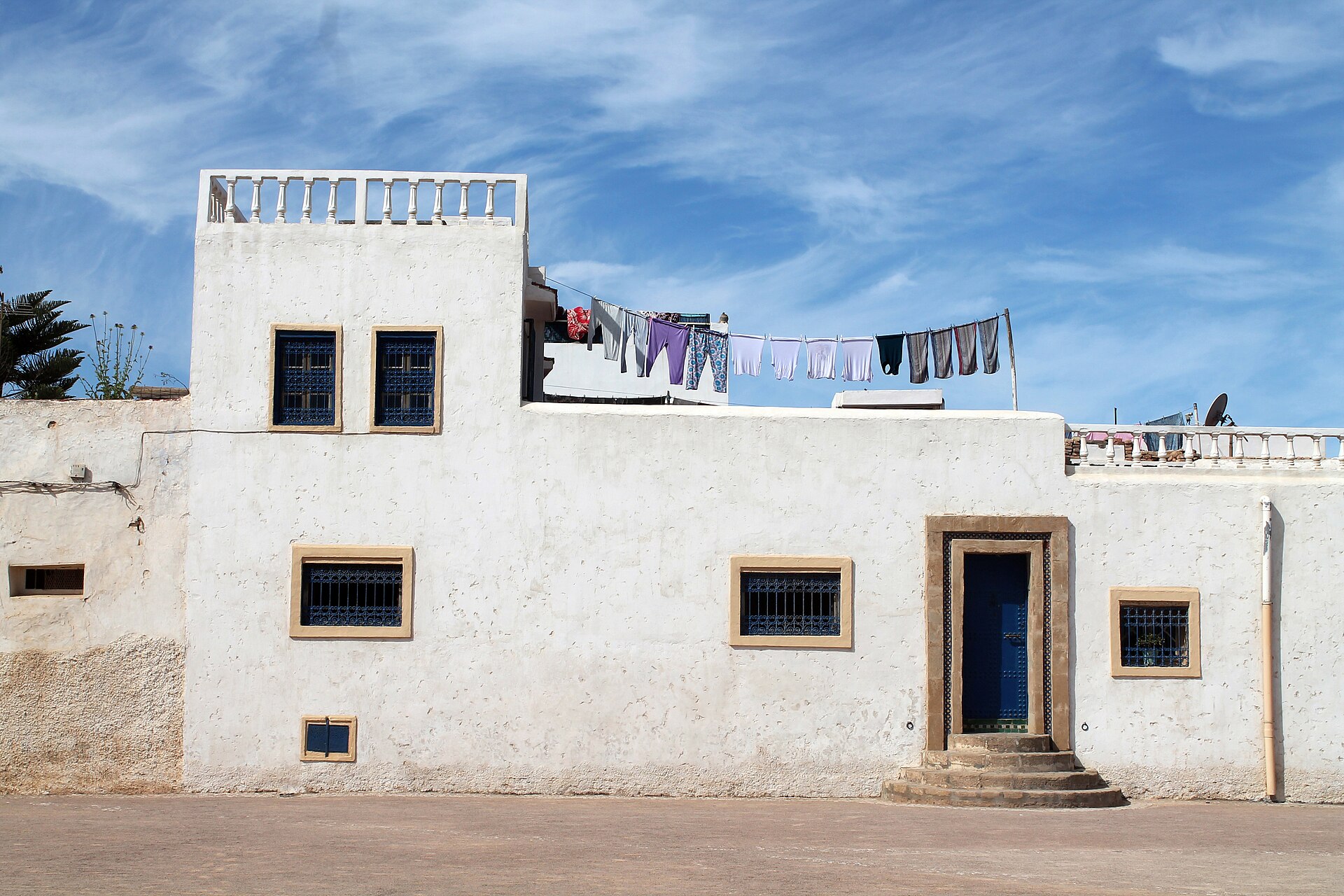
I do laundry on Wednesdays. Not because it's a good day, but because it's the only day I wake up wanting something besides coffee. Yesterday I put the week's three sets of scrubs in the machine, along with the sheets, the towels and the pajamas that had started standing up on their own, and at five thirty I carried everything up to the roof in a plastic tub, propped on my hip, with my knee weighing in on every step.
At that hour the roof is a different place from the one I sat on during my night off. There's sun, a little, already sideways, hitting the black water tanks. There are three wire clotheslines, one for each floor that remembers to use them, and the broken plastic chair in its usual corner. I hung everything fast, clothespins in my mouth, because I had to be out the door by seven. The navy scrubs ended up in a row, as if they'd lined up for shift change.
I didn't bring them down. I forgot. I remembered at two in the morning, in bay four, when someone opened the ER doors and in came that smell of wet earth that almost never reaches us here in November.
What rain does at two in the morning
It was the cold front the TV in the waiting room had been announcing since Monday, the one nobody believed. Not a storm, just one of those thin, stubborn drizzles that make no noise and soak everything. Pao looked out the hallway window and said, "Oh no, my laundry." I said, "Oh no, mine." We looked at each other and laughed, because we both had clothes hanging ten kilometers and twelve hours away, and there was nothing to do but keep taking vitals.
The bag on the door
I got home at a quarter past eight and went straight up to the roof without even putting my keys down. The line was empty. Not a single clothespin. The floor was shining, the tanks were dripping, and on the third-floor line hung a set of flowered sheets, the same ones from that night, hung out again and dripping. I assumed the worst, which in my case is always the most boring option: everything had fallen and I'd have to go knock on the door of the guy with the dog.
I went down to my floor with the face you have at that hour. And hanging from my doorknob was a big woven plastic shopping bag. Inside was my laundry. Folded. The scrubs with the sleeves tucked back, like in a store. The towels in thirds. The pajamas on top, as if someone had decided that was the most personal thing and should be left in plain sight so I'd know nothing had gone missing. All of it a little damp, smelling of rain and of my fabric softener.
Between the towels there was a scrap of lined notebook paper: "They were going to get wet. The sheets didn't fit, I left them on my chair. Marisol, 302." The sheets were on a wooden chair outside 302, one floor up, folded on top of a newspaper so they wouldn't get dirty.
Marisol
That afternoon, once I was up, I went upstairs to thank her with a pack of María cookies, because that's what was in the cupboard and because, as my history shows, they're what I use to make big decisions. The door was opened by a woman of about forty, in sweatpants, with a sleeping baby on one shoulder and a dish towel on the other, just in case.
"You're the one with the clogs," she said. "I hear you come up at eight."
I'd been told that before, at another door, in other words. Apparently everyone in this building knows who I am except me.
Her name is Marisol. The baby is Emiliano, he's four months old and he wakes up every night at two on the dot, as if someone had set an alarm for him. She feeds him and then can't get back to sleep, so she goes up to the roof to hang the sheets she washed during the day, because it's the only time she has her hands free. "The flowered ones," I said. She turned red. "You saw me." I told her yes, one night, from the edge of the utility room, and that I'd sent a photo to a coworker. She thought it was the funniest thing in the world. The baby didn't stir.
Last night, when it started raining, she was up there with him in her rebozo. She got her own sheets half down and then saw mine. "I wasn't going to leave your scrubs out there, poor things, all lined up." She brought everything down in two trips, Emiliano asleep the whole time, and folded my clothes in her living room at three in the morning, watching a movie on mute.
I said she'd been up just like me. She said no, she doesn't work nights, she's just awake. That it's not the same. I kept thinking she was right, and that maybe hers is worse.
The flowered sheets
This morning I left the hospital at seven forty under a low gray sky, the kind that can't make up its mind in Querétaro. I got to the building at a quarter past eight and, before going into my place, I went up to the roof out of habit, even though I had nothing hanging.
The flowered sheets were on the third-floor line again. Little drops were starting to fall, the kind you see on the water tank before you feel them on your face.
I took them down. I folded them in the utility room, on top of a bucket lid, my hands still smelling of sanitizer. The flat sheet came out fine. The fitted one didn't, because no one in the history of humankind has ever folded a fitted sheet properly, least of all me at eight twenty in the morning after a twelve-hour shift. It ended up as a lump shaped like a cloud.
I left it on the wooden chair outside 302, with a note torn from my to-do notebook: "Did the fitted one as best I could. Audrey, the clogs."
Keep reading
The Other Side of the Lamp
A molar that hurt with cold water, an appointment my sister booked without asking, and an hour in the dentist's chair, on the side I never get to be on.
The bread tastes like nothing now
On November 3rd the ofrenda comes down. An afternoon at my mom's packing up candles, a pan de muerto someone else already tasted and Grandpa's crooked photo.
Thirty Centimeters of Bun
I'd worn the same bun since nursing school. On Saturday, after my first run back, I sat down at Doña Yoli's salon and walked out a foot lighter.